

The Violence & Impacts
Early-Warning System
We deliver scalable, data-driven tools to empower decision-makers and humanitarian actors in early and anticipatory action.
Latest Updates
-
Posted on 28 Jun 2024
“Predicting fatalities using newspaper text”
Working paper documenting the prediction model submitted to the 2023/2024 VIEWS Prediction Challenge. Authors: Alexandra Málaga, Hannes Mueller, Christopher Rauh, and Benjamin Seimon
-
Posted on 28 Jun 2024
“A Zero-Inflated Poisson Generalized Additive Model for Forecasting Conflict Fatalities”
Working paper documenting the prediction model submitted to the 2023/2024 VIEWS Prediction Challenge. Author: David Muchlinski and Chandler Thornhill
-
Posted on 28 Jun 2024
“Probabilistic Conflict Forecasting with Automated Machine Learning”
Working paper documenting the prediction model submitted to the 2023/2024 VIEWS Prediction Challenge. Author: Vito D’Orazio
-
Posted on 28 Jun 2024
“Forecasting fatalities from state based conflicts using Markov models”
Working paper documenting the prediction model submitted to the 2023/2024 VIEWS Prediction Challenge. Authors: David Randahl and Johan Vegelius
-
Posted on 28 Jun 2024
Probabilistic Forecasting of Conflict Fatalities: Historical Quantiles vs. Bayesian Penalized Regression
Working paper documenting the prediction model submitted to the 2023/2024 VIEWS Prediction Challenge. Authors: Simon Drauz and Friederike Becker
-
Posted on 28 Jun 2024
“Temporal patterns in conflict prediction: An improved shape-based approach”
Working paper documenting the prediction model submitted to the 2023/2024 VIEWS Prediction Challenge. Authors: Thomas Schincariol, Hannah Frank, and Thomas Chadefaux
-
Posted on 28 Jun 2024
“Random Forest Predictions with Dyad Features”
Working paper documenting the prediction model submitted to the 2023/2024 VIEWS Prediction Challenge. Authors: Kristian Skrede Gleditsch, Finn Klebe, and Nils W. Metternich
-
Posted on 28 Jun 2024
Forecasting Monthly Fatalities via a Negative Binomial Distribution and Comparison with a Hurdle Model and Neural Networks
Working paper documenting the prediction model submitted to the 2023/2024 VIEWS Prediction Challenge. Authors: Tobias Bodentien and Lotta Rüter







Get Updates delivered directly to your inbox
Sign up for our monthly newsletter
What we Offer
Conflict forecasts
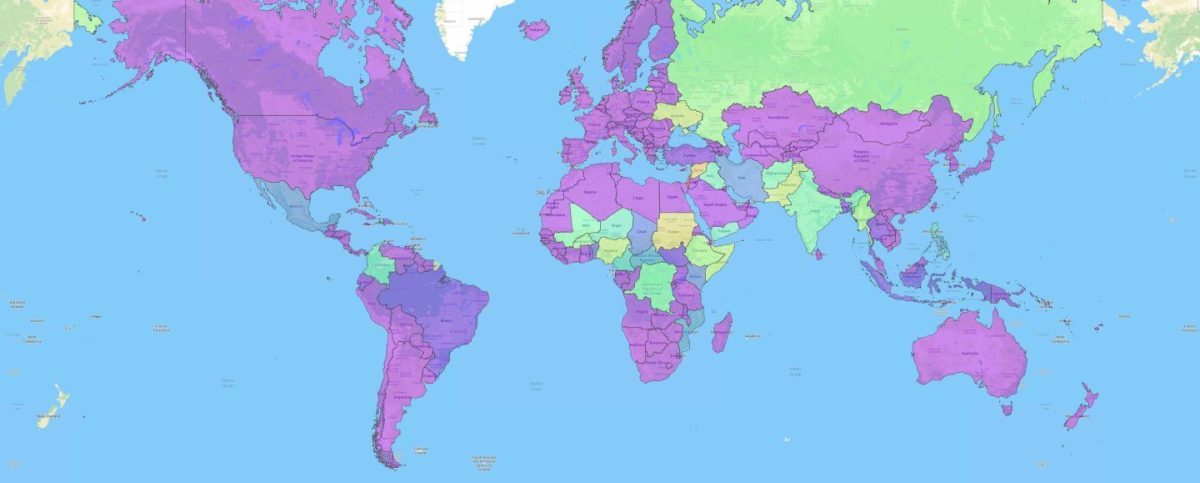
We provide open-access, monthly forecasts of armed conflicts worldwide at both country and sub-national levels, capturing the likelihood, extent and severity of future violence over the next 1-36 months.
impact assessments
We estimate the impact of future conflict events on affected populations, allowing decision-makers and humanitarian actors to stay ahead of emerging crises.
Research infrastructure
We provide an open-access, cutting-edge MLOps pipeline for near real-time forecasting, ensuring robust and reliant service for use across the humanitarian, development, and peace nexus.
Interesting in powering your models on our platform, or incorporating them into the VIEWS EWS? Let’s talk!
global partnerships
We collaborate with leading research institutes, IGOs, INGOs and governments, to develop innovative forecasting solutions that enhance decision-making and empower humanitarian actors to stay ahead of emerging crises.
Schedule a call to learn more on how we assist you and your organization.
Acknowledgements
Host institutions, funding agencies, and partners
VIEWS is co-hosted by the Department of Peace and Conflict Research at Uppsala University and Peace Research Institute Oslo. The research presented on this website is the outcome of projects that has received funding from the European Research Council (ERC) under the European Union’s Horizon 2020 research and innovation programme (Grant agreement No. 694640, ViEWS) and Horizon Europe (Grant agreement No. 101055176, ANTICIPATE; and 101069312, ViEWS (ERC-2022-POC1)), Riksbankens Jubileumsfond (Grant agreement No. M21-0002, Societies at Risk), the United Nations Economic and Social Commission for Western Asia (ViEWS-ESCWA), the United Kingdom Foreign, Commonwealth & Development Office (GSRA – Forecasting Fatalities in Armed Conflict), the Swedish Research Council (DEMSCORE), the Swedish Foundation for Strategic Environmental Research (MISTRA Geopolitics), the Norwegian MFA (Conflict Trends QZA-18/0227), the United Nations High Commissioner for Refugees (the Sahel Predictive Analytics project and Global Mapping of Forecasting Systems), the Norwegian Research Council (UFFAC), and the Complex Risk Analytics Fund (CRAF’d, VIEWS-PIN).