
The Violence & Impacts
Early-Warning System
We deliver scalable, data-driven tools to empower decision-makers and humanitarian actors in early and anticipatory action.
Latest Updates
-
Posted on 31 Dec 2025
New Data Release: Forecasts for Dec 2025 – Nov 2028
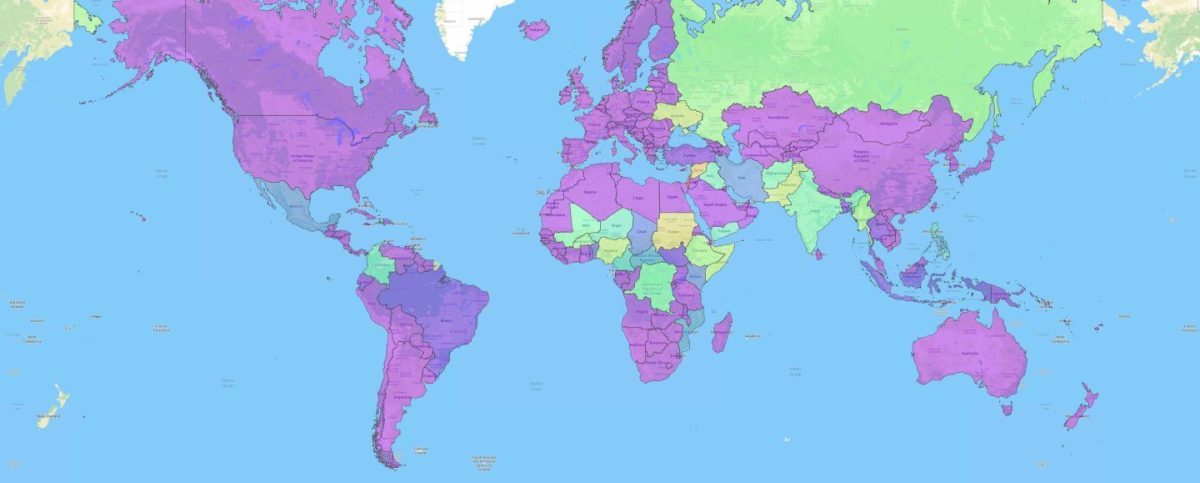
The latest VIEWS forecasts for state-based armed conflict are now available, covering the 36-month period from December 2025 through November 2028. The dataset includes global forecasts at the country-month level, along with geo-referenced forecasts at 0.5° spatial resolution for Africa and the Middle East. It captures the following indicators for state-based armed conflict: 📥 Download…
Topics: fatalities003 -
Posted on 12 Dec 2025
New Forecasts of the Deadliest Conflict Zones in 2026
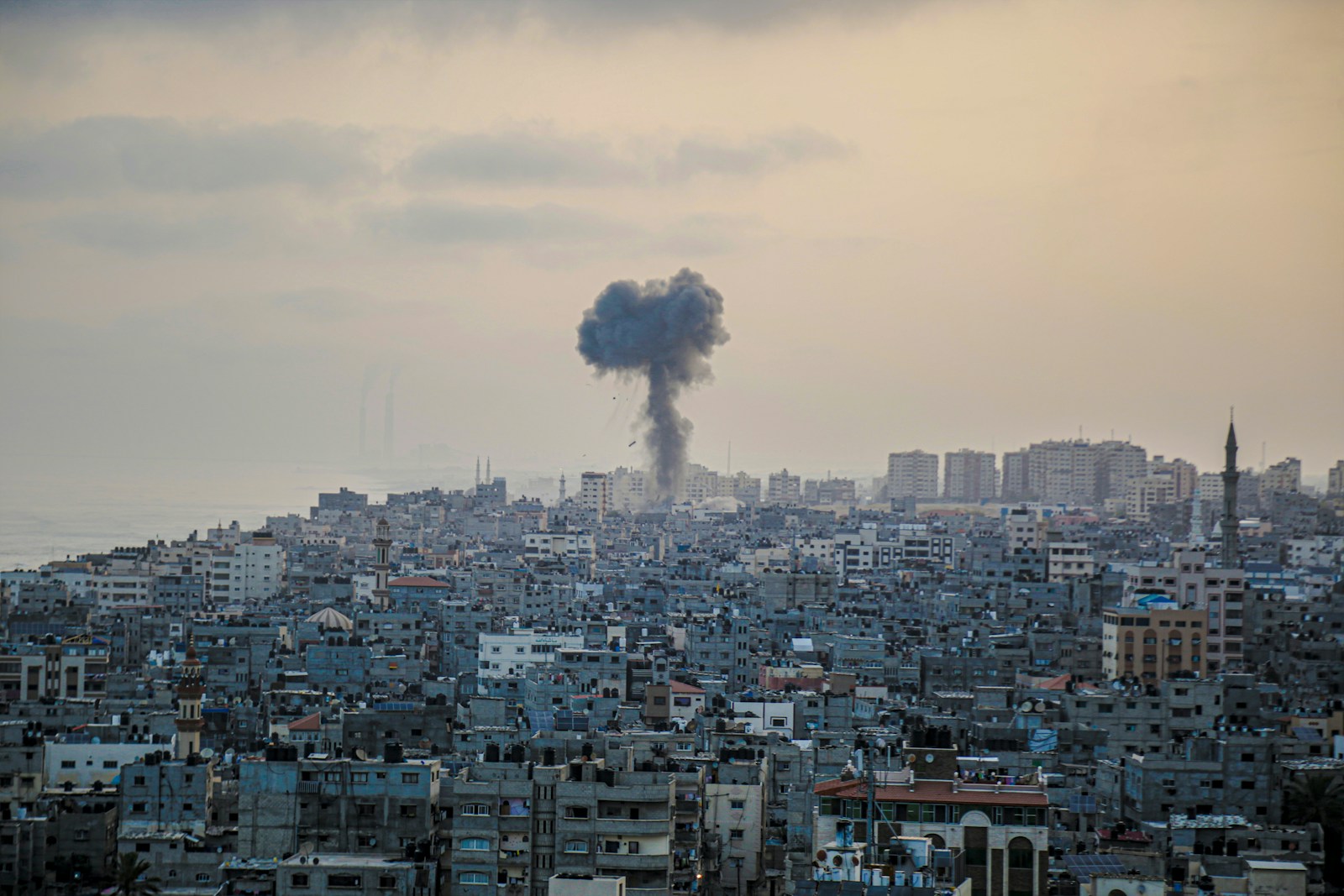
Press release – original posted by PRIO Ukraine, Palestine/Israel, Sudan, Pakistan and Nigeria are projected to see the highest battle-related death tolls in 2026, according to a world-leading AI-driven conflict forecasting system. The Violence and Impacts Early-Warning System (VIEWS) is an award-winning conflict prediction model developed by the Peace Research Institute Oslo (PRIO) and Uppsala University, that…
-
Posted on 12 Dec 2025
Vacancies: Junior Data Developer and Senior or Postdoctoral Researcher
We are pleased to announce two new positions, with a deadline of 15 January 2026, to join Research Professor Håvard Hegre and the VIEWS team at PRIO: 𝐉𝐮𝐧𝐢𝐨𝐫 𝐃𝐚𝐭𝐚 𝐃𝐞𝐯𝐞𝐥𝐨𝐩𝐞𝐫 We’re looking for a candidate with a great interest in data-driven social science, and experience in design and maintenance of databases and machine learning, to join the project…
-
Posted on 4 Dec 2025
VIEWS Director Håvard Hegre Featured in Finland’s Helsingin Sanomat
VIEWS Director Håvard Hegre was recently interviewed by Helsingin Sanomat, Finland’s largest subscription newspaper, in a feature exploring how artificial intelligence is used to predict and steer the course of violent conflicts — including the ongoing war in Ukraine. The article highlights VIEWS’ recent forecasts, which show both a projected decline in conflict-related fatalities in…
-
Posted on 3 Dec 2025
VIEWS Director Interviewed on Controversial Gaza Death Toll Report
VIEWS Director Håvard Hegre was recently interviewed by the Danish fact-checking site TjekDet in connection with an article scrutinizing a widely circulated – and highly controversial – report on projected deaths in Gaza. The article, titled “Useriøs” og “ekstremt uansvarlig”: Forskere kritiserer rapport, der anslår 680.000 døde i Gaza (“Unserious” and “extremely irresponsible”: Researchers criticize…
-
Posted on 3 Dec 2025
UU-PRIO Team Workshop in Oslo
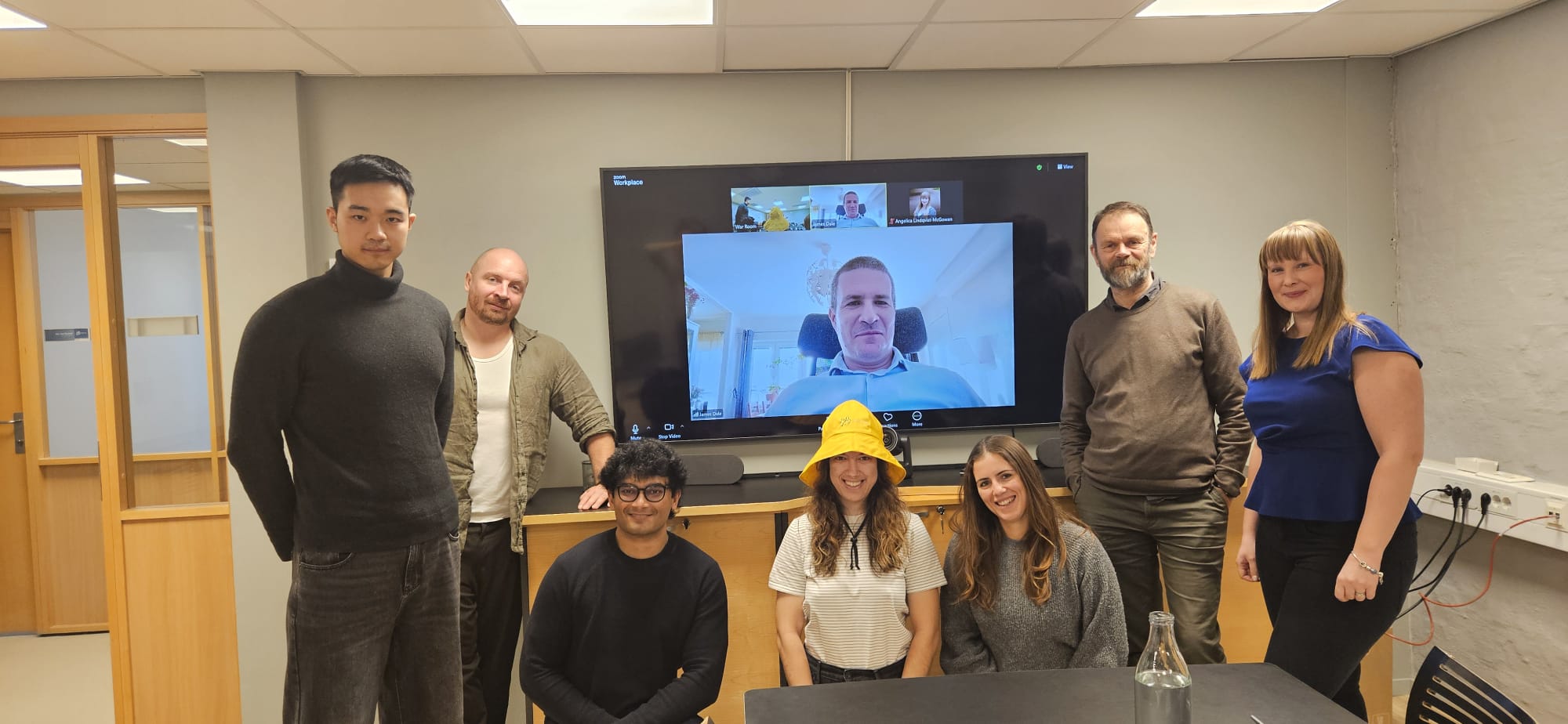
Oslo, Norway – The VIEWS team convened at PRIO from 19–21 November for a hands-on workshop to finalize the new production model pipeline, which was successfully launched last week. The workshop also provided an opportunity to plan for future model development and broader project initiatives. Over the course of three days, the team tackled in-depth…
-
Posted on 2 Dec 2025
VIEWS Researchers Present EdAttack Framework at Peace Science Society Conference
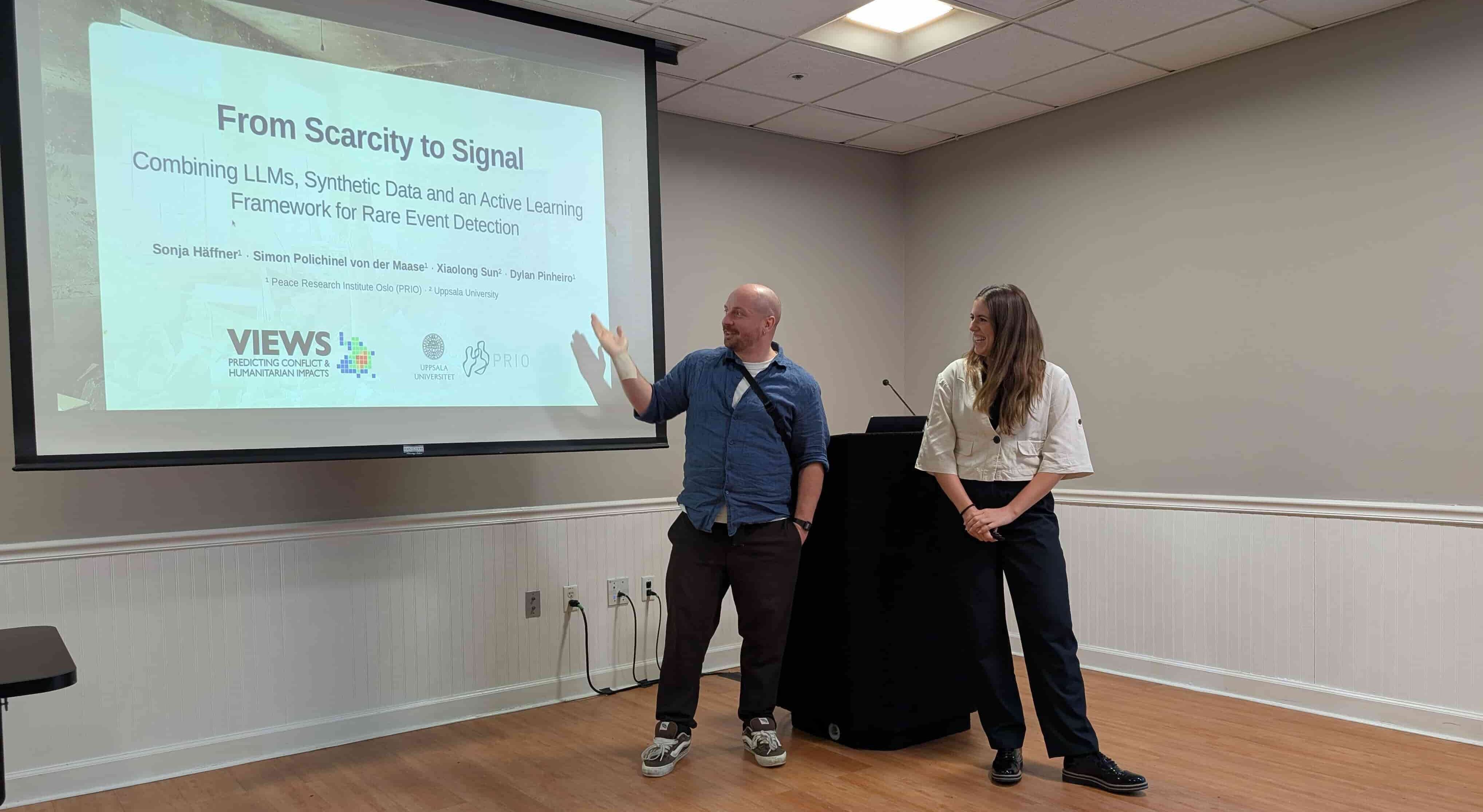
Sonja Häffner and Simon Polichinel von der Maase presented at the 59th North American Meeting of the Peace Science Society (International) in Orlando, Florida. They discussed the EdAttack project, which systematically studies conflict-related attacks on education in sub-Saharan Africa using large language models to understand their consequences for affected children’s futures.




Get Updates delivered directly to your inbox
Sign up for our monthly newsletter
What we Offer
Conflict forecasts
We provide open-access, monthly forecasts of armed conflicts worldwide at both country and sub-national levels, capturing the likelihood, extent and severity of future violence over the next 1-36 months.
impact assessments
We estimate the impact of future conflict events on affected populations, allowing decision-makers and humanitarian actors to stay ahead of emerging crises.
Research infrastructure
We provide an open-access, cutting-edge MLOps pipeline for near real-time forecasting, ensuring robust and reliant service for use across the humanitarian, development, and peace nexus.
Interesting in powering your models on our platform, or incorporating them into the VIEWS EWS? Let’s talk!
global partnerships
We collaborate with leading research institutes, IGOs, INGOs and governments, to develop innovative forecasting solutions that enhance decision-making and empower humanitarian actors to stay ahead of emerging crises.
Schedule a call to learn more on how we assist you and your organization.
Acknowledgements
Host institutions, funding agencies, and partners
VIEWS is co-hosted by the Department of Peace and Conflict Research at Uppsala University and Peace Research Institute Oslo. The research presented on this website is the outcome of projects that has received funding from the European Research Council (ERC) under the European Union’s Horizon 2020 research and innovation programme (Grant agreement No. 694640, ViEWS) and Horizon Europe (Grant agreement No. 101055176, ANTICIPATE; and 101069312, ViEWS (ERC-2022-POC1)), Riksbankens Jubileumsfond (Grant agreement No. M21-0002, Societies at Risk), the United Nations Economic and Social Commission for Western Asia (ViEWS-ESCWA), the United Kingdom Foreign, Commonwealth & Development Office (GSRA – Forecasting Fatalities in Armed Conflict), the Swedish Research Council (DEMSCORE), the Swedish Foundation for Strategic Environmental Research (MISTRA Geopolitics), the Norwegian MFA (Conflict Trends QZA-18/0227), the United Nations High Commissioner for Refugees (the Sahel Predictive Analytics project and Global Mapping of Forecasting Systems), the Norwegian Research Council (UFFAC), and the Complex Risk Analytics Fund (CRAF’d, VIEWS-PIN).